
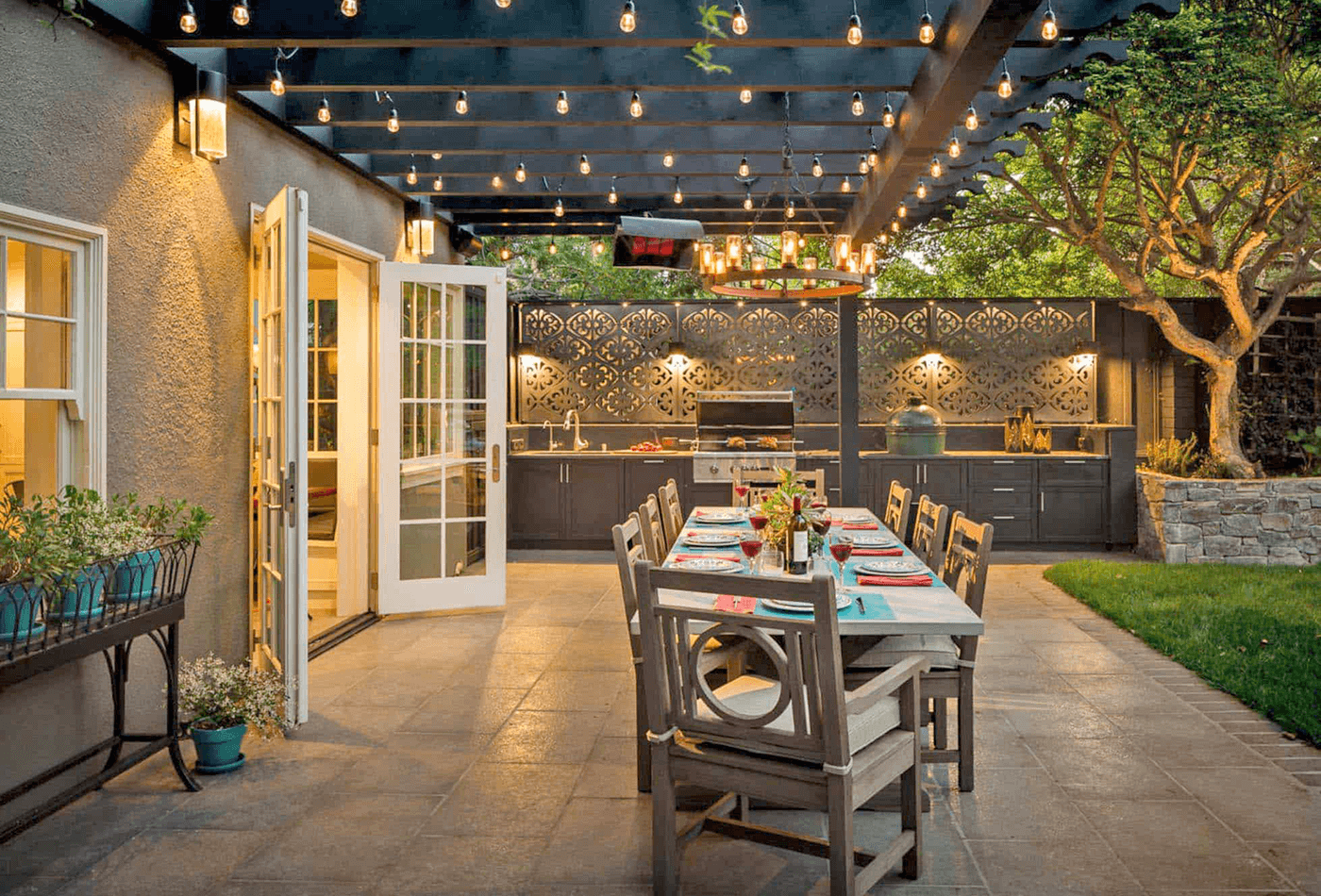
Today’s gardens are becoming extensions of kitchens, lounges, and dining areas. When designed thoughtfully, these spaces enhance your lifestyle and increase property value.
If you want your indoor and outdoor areas to feel connected rather than separate, landscaping plays a crucial role. Here’s how you can restructure your garden to make your home feel larger, brighter, and more functional.
Choose the Right Plants for Indoor-Outdoor Flow
You don’t need to break a wall to blur the line between indoors and outdoors. Just use greenery. Plant selection is actually one of your most powerful tools.
Choose varieties that thrive in both sheltered and open environments to create visual consistency. Low-maintenance options like succulents and ferns work especially well if you prefer a garden that looks good without demanding constant attention.
Layering your planting scheme will make the transition feel natural. Combine ground cover, mid-height shrubs, and taller feature plants to add depth and soften edges between spaces.
This layered look mirrors nature and prevents patios or decking areas from feeling stark or disconnected.
You should also think about scent and texture. Placing fragrant plants near doorways or seating areas enhances the sensory experience of moving outside.
Mixing soft foliage with structured leaves is a great idea, but it needs thoughtful planning. The contrast you will create keeps the design visually interesting without overwhelming the space.
Drought-tolerant plants are another smart choice. They reduce water usage and help lower maintenance costs. Adding seasonal plants keeps the space dynamic, while grouping pots makes watering more efficient and the whole area more cohesive.
Finally, choose planters and pots that complement both your interior décor and your outdoor finishes. When materials and colours align, the overall effect feels intentional and harmonious.
Create Functional Outdoor Living Areas
To truly extend your home outward, your garden should have a clear purpose. Think about how you want to use it.
Do you need an outdoor dining zone? A relaxed lounge area? A space for cooking and entertaining? Defining these zones ensures your outdoor space works as hard as your interior rooms.
Flexible, durable furniture makes a big difference. Opt for pieces that can be rearranged easily and withstand changing weather conditions. Rugs, pergolas, and umbrellas help define areas while adding comfort and protection.
Weather protection is essential if you want year-round usability. Strategic planting, screens, or windbreak panels can shield seating areas from harsh conditions. It’s a great way to make them more comfortable and practical.
You can also integrate subtle technology to increase functionality. Outdoor speakers, discreet power outlets, and strong Wi-Fi coverage allow you to work, entertain, or relax without limitations. With thoughtful planning, these additions feel seamless rather than intrusive.
Incorporate Hardscaping for Structure and Balance
Hardscaping provides the structure that ties everything together. Patios, stone pathways, and brickwork create visual anchors that guide movement and add durability. Using permeable materials can improve drainage and reduce maintenance in the long term.
Raised beds and retaining walls offer both structure and practicality. They define spaces clearly while making planting more manageable. Adding levels to your garden can also make smaller areas feel more dynamic and spacious.
Clear edging between planting beds and paved areas keeps your garden looking polished while preventing soil erosion. Gravel or decorative stone can reduce weeds and add texture without increasing upkeep.
To create a cohesive look, choose materials that complement your home’s exterior. Matching tones and textures between the house and garden strengthens the indoor-outdoor connection and prevents the space from feeling like an afterthought.
Install Outdoor Lighting for Ambience and Safety
Lighting has the power to completely transform your outdoor space. When done well, it adds warmth, depth, and security.
Layered lighting works best. Combine ambient lighting for atmosphere, task lighting for functionality, and accent lighting to highlight plants or architectural features.
String lights and lanterns create a cosy feel, while pathway lighting improves safety by guiding movement after dark. Motion sensor lights add an extra layer of security without increasing energy usage.
To avoid harsh brightness, place lights strategically to eliminate dark spots while maintaining balance. Weatherproof fixtures are essential to ensure longevity and reduce replacement costs.
Smart lighting systems give you even more control. With timers or app-based settings, you can adjust brightness and schedules to suit different occasions. It simply makes life easier, whether you’re hosting a gathering or enjoying a quiet evening outside.
Seamlessly Integrate Indoor and Outdoor Spaces
The most successful outdoor living spaces feel like a natural continuation of your home. Large sliding or folding doors allow natural light to flood in while opening up views of your garden. Similarly, consistent flooring materials or complementary finishes help maintain visual flow.
Transitional spaces such as covered patios or glazed extensions can bridge the gap between inside and outside. These areas offer shelter while still keeping you connected to the outdoors.
Repeating colours, textures, and materials across both spaces is a simple but effective approach. It strengthens cohesion and ties up spaces.
Along the same lines, matching furniture styles, textiles, or decorative elements helps everything feel unified rather than separate.
You can also enhance comfort with features like outdoor heaters or fire pits, extending usability well into the cooler months. When thoughtfully planned, your garden can be a true extension of your everyday living space.
Focus on Sustainable Landscaping Practices
Sustainability isn’t just a trend — it’s a smart long-term investment. Choosing native plants supports local wildlife and reduces water usage. Xeriscaping techniques maintain visual appeal while keeping maintenance manageable.
Installing rainwater harvesting systems allows you to irrigate efficiently without relying heavily on mains water. Organic mulch retains soil moisture and reduces the need for frequent watering.
Another practical approach is reducing lawn areas in favour of planting beds or wildflower patches, as it encourages biodiversity and lowers upkeep.
Composting garden and kitchen waste is a great practice as well. It improves soil health naturally, eliminating the need for chemical fertilisers.
Long-term planning is essential. Select durable materials, design with mature plant growth in mind, and incorporate efficient irrigation systems.
As outdoor areas become more sophisticated, bringing in professionals can make a significant difference. Designing truly cohesive outdoor living spaces requires careful planning, structural understanding, planting knowledge, and practical layout expertise.
Experienced landscapers and designers can help you avoid costly mistakes, maximise your available space, and ensure every element works together seamlessly.
If you want a polished, long-lasting result that genuinely enhances your home, professional guidance is often the smartest investment.
Conclusion
A seamless indoor-outdoor flow creates more usable space, more opportunities to entertain, and more moments to unwind. It transforms your property from something you own into something you truly experience.
If your garden currently feels disconnected, underused, or purely decorative, now is the time to rethink its potential. With the right approach, your outdoor space can become one of the most valuable and enjoyable parts of your home.


